
Biodegradable Surgical Staples --- The New Staple of post-op Sutures?

Traditional surgical staples — made from stainless steel or titanium — have been a staple in abdominal and colorectal surgeries for decades, securing tissue and reducing operative time. Yet they carry risks: chronic inflammation, imaging artifacts, and the need to remain permanently in the body. A new generation of biodegradable surgical staples offers a cleaner, safer alternative that dissolves on its own after healing is complete.
Biodegradable staples are made from materials such as polyglycolic acid (PGA), polylactic-co-glycolic acid (PLGA), or magnesium alloys. These polymers maintain tensile strength temporarily—typically for one to two weeks—allowing tissues to heal. Over the ensuing weeks to months, they safely degrade into metabolic byproducts like glycolic or lactic acid, which are naturally cleared by the body. Magnesium options degrade even faster, often within three to six months, while promoting mild osteointegration for bone anchoring.
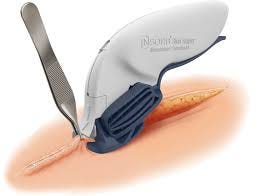
Early clinical trials offer promising outcomes. A 2022 randomized study involving colectomy patients compared standard metal staples to PLGA-based biodegradable staples. The new staples maintained equivalent rates of anastomotic integrity—no leaks, strictures, or bleeding—and elicited less postoperative inflammatory response on imaging. CT scans at six months revealed significantly reduced artifact, improving clarity for follow-up scans, especially when monitoring for recurrence or complications.
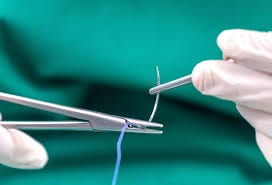
Another prospective trial in complex ventral hernia repair reported favorable outcomes using biodegradable magnesium staples to secure mesh. At one-year follow-up, patients showed no increased recurrence and less chronic pain compared to metal-fixated mesh. The degradation profile of magnesium allowed gradual load transfer to the abdominal wall, reducing foreign-body irritation. No adverse reactions to degradation products were observed.
The advantages extend beyond patient comfort. Biodegradable staples eliminate long-term foreign body presence, reducing chronic inflammation and potentially minimizing the risk of staple-related adhesions. They also remove imaging limitations: metal staples cause streak artifacts on CT and MRI, complicating monitoring in cancer survivors or post-transplant care. Dissolvable staples, by contrast, leave no residual artifact after degradation.
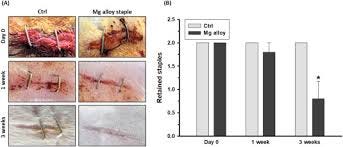
Economically, biodegradable staples are more expensive per unit—c
osting four to six times more than stainless steel staples—but may result in equal or superior value overall. Modeling studies estimate cost savings of $1,500 to $2,500 per patient by avoiding late imaging artifacts, reoperations for staple-related complications, or pain management for staple irritation. For specific procedures such as bariatric surgery or colorectal resection—where follow-up imaging and long-term outcomes are critical—the benefits may justify the premium.
Adoption is growing gradually. FDA clearance in 2023 granted approval to a PLGA‑based surgical stapler system by a leading medical device firm, followed by CE mark approval in Europe. Hospitals in the U.S. and EU began pilot deployments, especially in tertiary centers performing high volumes of gastrointestinal or transplant procedures. Surgeons report no learning curve for deployment—biodegradable staples handle similarly to existing devices—and sterilization protocols remain unchanged.
Despite traction, challenges remain. Surgeons must account for the degradation timeline; using biodegradable staples for organs requiring long-term mechanical support (like bone) may not yet be appropriate. Breakdowns must be predictable and free from sharp edges. Quality control in manufacturing is critical—batch variability could affect strength or degradation rates. Regulatory oversight continues to evolve, as agencies balance device and tissue scaffold standards.
Looking ahead, research teams are advancing next-generation materials with tunable degradation rates and even bioactive coatings that release antimicrobial or anti-inflammatory agents during healing. Magnesium alloy staples embedded with silver nanoparticles for infection-resistant closure are currently in preclinical trials. Other innovations include shape-memory polymers that adapt to tissue swelling and dissolve only after mechanical load falls below thresholds.
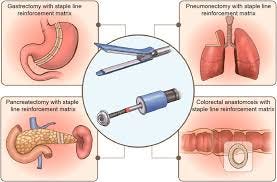
Biodegradable staples are also being tested in laparoscopic surgery, where metallic clips or staples may pose challenges. In minimally invasive appendectomies and cholecystectomies, dissolvable ligating devices reduce the risk of gallbladder clip migration or metal staples interfering with future radiologic evaluation.
In abdominal surgery, where precision, healing, and clarity matter, biodegradable surgical staples offer a subtle but meaningful evolution. They stay when needed, then vanish when healing is complete — without a trace.
What do you think?